Corian Countertop Installation Process: What to Expect Step by Step

Most people picture installation day as the big event: truck pulls up, countertop goes in, dinner on it by evening. That’s the last chapter. The real work happens before anyone lifts a sheet of Corian — and knowing the sequence is what keeps a job on schedule.
We’ve installed Corian all over Detroit. Here’s how it actually goes.
Step 1: The visit and the rough measurements
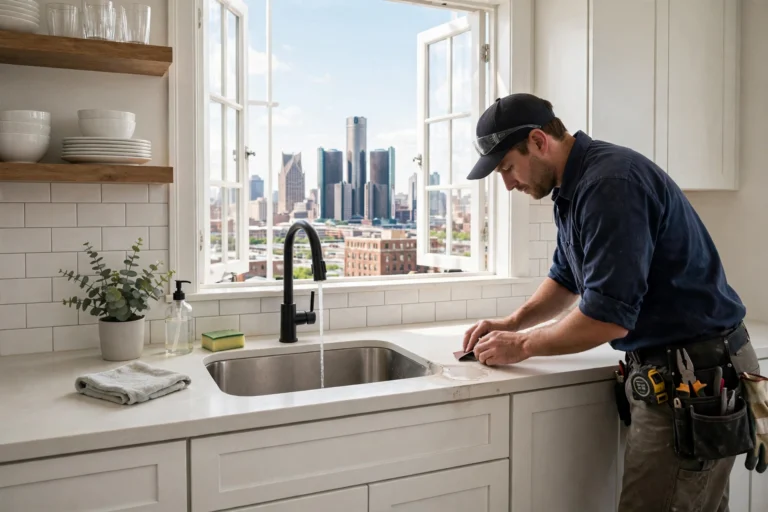
Everything starts at your kitchen. We come out, look at the space, and talk through what you want — color, edge profile, sink, and backsplash height.
We take rough measurements on that first visit — good enough to price the job and order material, but nobody cuts Corian off a tape-measure reading. Walls in older Detroit homes are almost never straight, and cabinets are rarely as level as they look. If someone quotes a firm price without ever stepping foot in your kitchen, that’s a red flag.
We also check the cabinets. Corian needs a solid, level base. If yours sag or rock, we flag it now — not on install day. Most of the time a few shims fix it.
Step 2: The template — the step you never see but can’t skip
Once you’ve picked your color and signed off, we come back to make a template — the most important visit of the job, and the one homeowners ask about least.
A template is a full-size pattern of your countertop, built right on your cabinets from thin strips of wood or rigid plastic, hot-glued together along every wall and odd angle. It records exactly where the sink goes, where the cooktop cutout sits, and how far the overhang runs.
Why not just measure with a tape? Because your walls aren’t square. A tape gives you numbers; a template gives you the truth — every place the wall drifts a quarter inch over six feet — so the finished top sits tight instead of leaving a gap to caulk over.
The visit takes 30 to 60 minutes, and your old countertop stays in place. Nothing gets cut until the template is done and you’ve confirmed the final details.
Step 3: Fabrication happens in the shop
Your countertop is built offsite, in our shop, from the template. Corian arrives as flat sheets — usually a half inch thick, 30 inches wide, 12 feet long. We cut to your template, route the sink and cooktop openings, and shape the edge profile you picked.
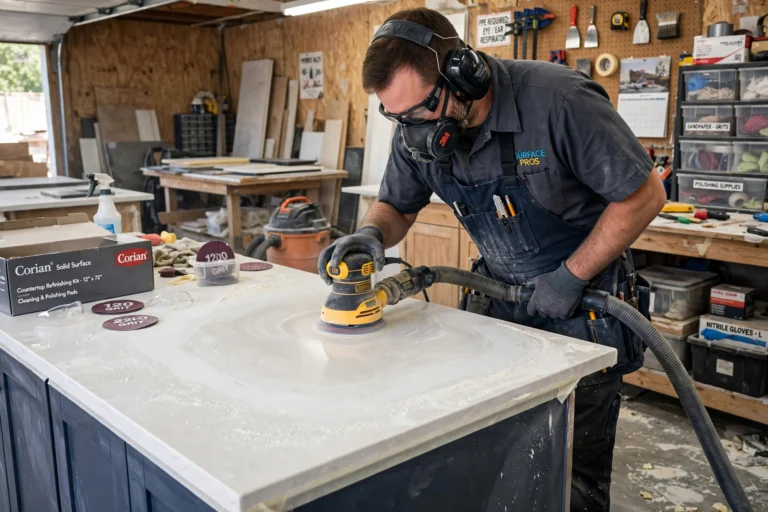
Then comes the part that makes Corian what it is: the seams. When a kitchen is bigger than one sheet — an L-shape, a long run with an island — pieces get joined with color-matched two-part adhesive, clamped, cured, then sanded flat. Done right, you can’t see it or feel it. That’s the whole point of solid surface.
The edge gets built up too — a second strip glued underneath the front, sanded smooth, so the top looks thicker than a half inch. An undermount sink gets bonded to the underside in the shop, not on your kitchen floor.
Fabrication usually takes a week or two. A straight galley kitchen moves fast; an island or curved breakfast bar takes longer. Anyone promising next-day turnaround is cutting corners.
Step 4: Install day — what actually happens
Install day starts with the old countertop coming out — the messiest part of the day. Old laminate and tile come off in pieces, and there’s dust. We protect your floors and contain what we can, but your kitchen will not be spotless that afternoon.
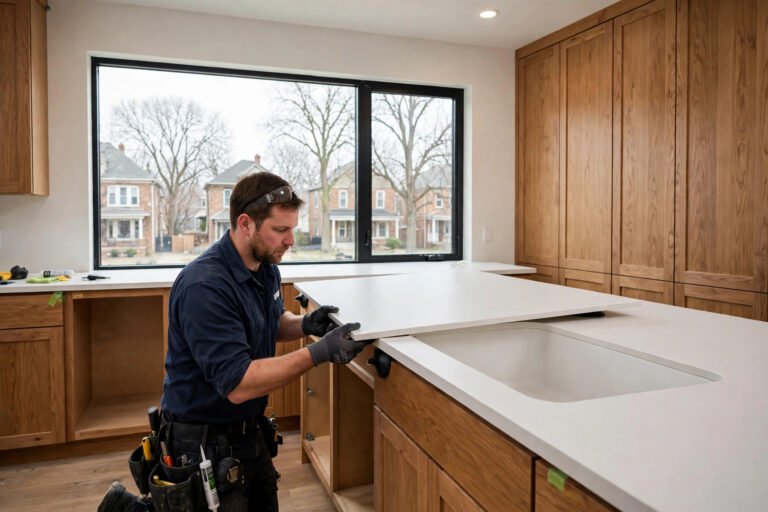
Then the new pieces come in. Corian sections are heavy and awkward — a 10-foot run takes two people and a careful path through your house. We set each piece on the cabinets and shim where needed so the top sits dead level. Even slightly out of level shows at the seams and the sink, so we don’t rush this part.
Seams get joined on site the same way they do in the shop: adhesive, clamps, cure time, then sanding. The final sanding sets the finish — matte, satin, or semi-gloss. There’s no coating on Corian; the sheen comes from the sanding itself, which is also why a scratched top can be sanded out later instead of replaced.
Plumbing gets reconnected last. Then we clean up and walk the job with you — every seam, every edge, the sink joint. A typical Detroit kitchen takes most of a day; a small straight run, a few hours; a big one with an island, sometimes two days.
From the first visit to install day, plan on two to four weeks — the template and shop time take most of it.
What to do before we arrive on install day
A little prep on your end makes the day go faster and keeps your stuff safe:
- Clear the counters completely. The coffee maker, the knife block, the fruit bowl — everything. Clear the cabinets under the sink too, since we’ll be working underneath it.
- Clear a path. We carry long, heavy sections through your home. Move the rug, the dog gate, the shoes by the back door.
- Plan for no kitchen that day. No sink, no cooktop if it’s built in. Have a plan for meals, and keep kids and pets out of the work area.
- Know where the water shutoff is. We’ll ask. It’s a two-minute question that saves a headache if a valve fights back.
- Expect dust. We contain it, but fine sanding dust gets around. Cover anything in the next room you care about.
What can go wrong — and what we do about it
Most jobs go fine. But here are the problems we actually see.
Cabinets out of level. The most common one, especially in older homes. A run that’s a quarter inch low on one end means the top won’t sit right. We shim it — or stop and talk to you before forcing anything, because a forced top cracks later. Repairs after the fact cost real money, which is why our repair cost guide exists.
Walls that aren’t square. Normal — that’s what the template is for. If a wall bows badly, the top may need a small scribe cut on site. Extra time, not extra money.
A seam that shows. Rare, and it means something went wrong — wrong adhesive color, a joint that moved while curing. A good installer fixes it on the spot. If someone tells you a visible seam is “just how Corian looks,” they’re wrong.
One last thing: Corian doesn’t love a hot pan set straight down on it. Use a trivet.
After install: the first 24 hours
You can use your countertops the same day, but go easy for the first day — the silicone at the backsplash and around the sink needs a day to set. Don’t scrub the seams.
Cleaning is simple from day one: warm water, a soft cloth, ordinary dish soap. No special cleaners, no sealing, ever — Corian is non-porous. Our guide on how to clean Corian countertops covers it in full.
Frequently asked questions
How long does it take to install Corian countertops?
The install itself usually takes one day — a few hours for a small straight run, a full day for a kitchen with an island or multiple seams. The whole job runs two to four weeks, mostly template and shop time.
Can Corian countertops be installed over existing countertops?
No. The old top has to come out so we can check the cabinets, level the base, and set the new top properly. Installing over an old surface hides problems and voids the warranty.
Do I need to be home during installation?
Yes, at least at the start and the end — we need you to confirm placement and walk the finished job with us. You don’t have to watch every minute, but be there for the final walkthrough.
How much does Corian countertop installation cost?
It depends on size, color, edge profile, and sink. Material, fabrication, and installation are usually quoted together as one installed price. Our Corian countertops cost guide breaks down what Detroit homeowners typically pay.
Is Corian installation messy?
There’s dust — mostly from removing the old top and the final sanding. We protect your floors and contain the work area, but plan on wiping down the kitchen that evening. It’s cleaner than a stone install, since the heavy cutting happens in our shop.
Ready to get your Corian countertops installed?
Now you know what the process looks like — no surprises. If you’re planning a kitchen in Detroit or southeast Michigan, we’d be glad to come take a look and give you a straight quote with the timeline attached.
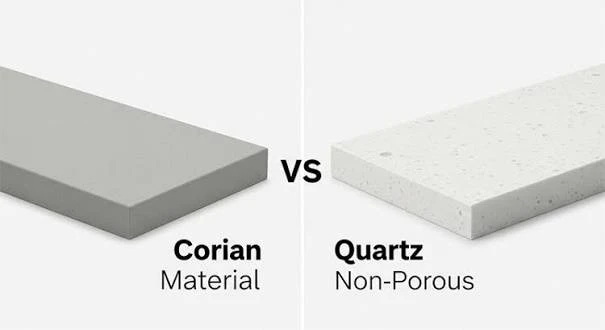
Call us at (833) 422-2167 or reach out through our contact page to set up a visit. And if you’re still deciding between materials, our Corian vs quartz comparison lays out the real differences — no hype, just what we’ve seen in people’s kitchens.