Corian Countertops: Pros and Cons — A Detroit Installer’s Honest Guide
What Corian Actually Is (60-Second Primer)
Corian is a solid-surface material invented by DuPont back in 1967. It’s made from acrylic resin blended with natural minerals, which gives it a smooth, consistent look all the way through — there is no “surface layer” to wear off. Because the color and pattern run through the entire thickness, scratches and scuffs can be sanded out instead of living with them forever. That one property shapes almost everything below.
Pro #1: Seamless, Non-Porous Surface
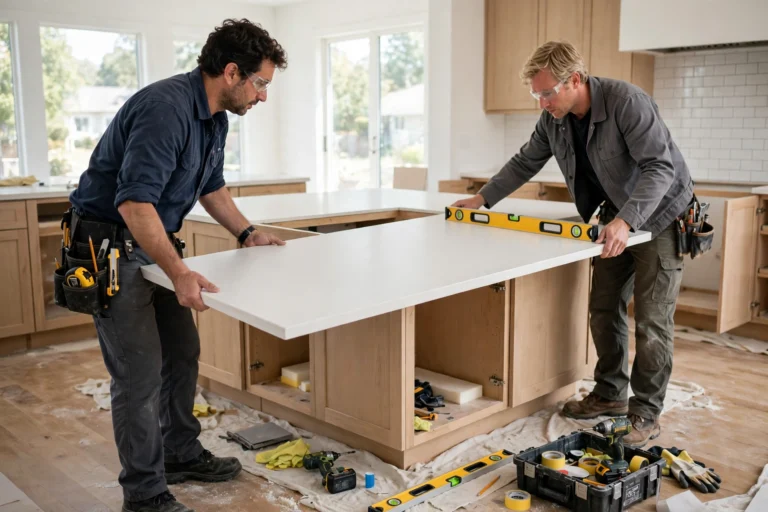
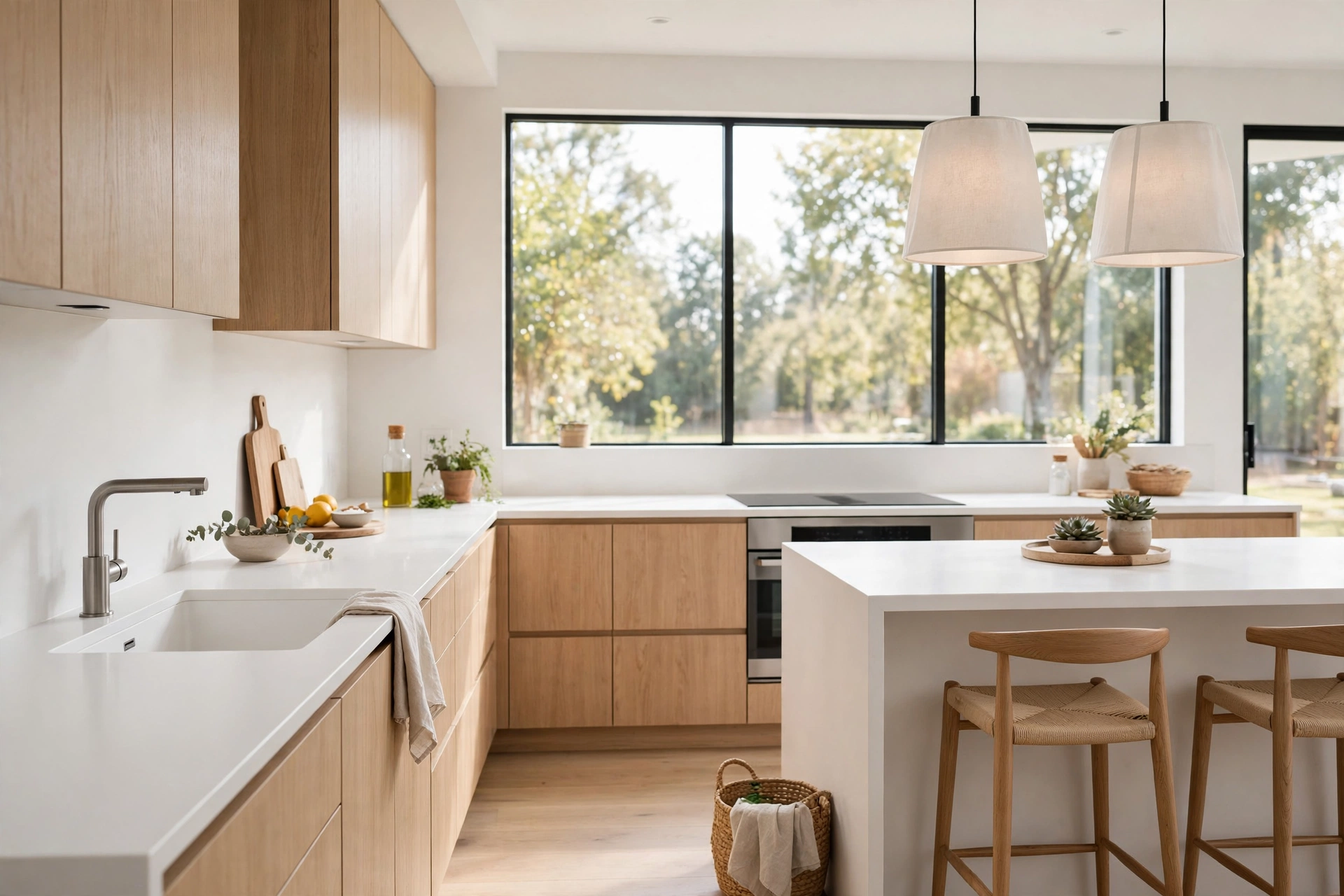
This is Corian’s signature advantage. Pieces of Corian are joined with a color-matched adhesive and then sanded smooth, so seams become virtually invisible — even on long runs and L-shaped kitchens. Sinks can be integrated directly into the countertop with no lip or rim to trap grime. And because the material is non-porous, it doesn’t need sealing, doesn’t harbor bacteria in tiny crevices, and wipes clean with soap and water. For busy kitchens, that’s a genuine quality-of-life win.
Pro #2: Repairable and Renewable
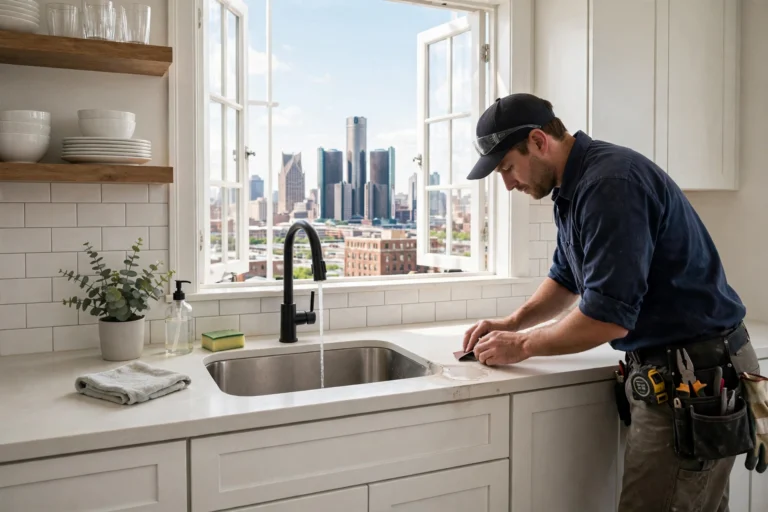
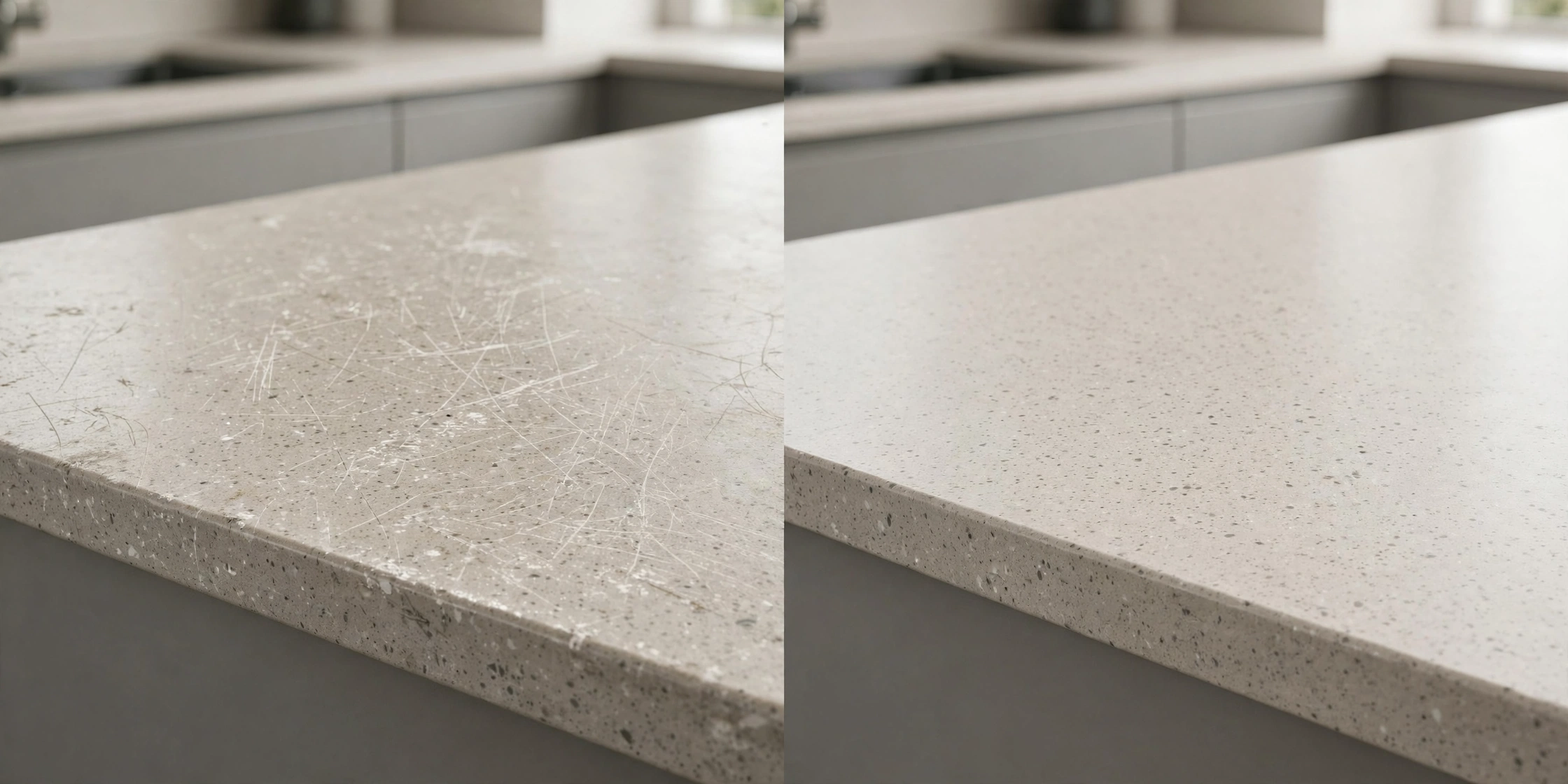
Here’s what separates Corian from stone: most everyday damage is reversible. Light scratches, scorch marks, and dull spots can be sanded and polished out — by a homeowner with the right pads for minor marks, or by a professional for deeper damage. A 15-year-old Corian countertop can often be refinished to look nearly new for a fraction of replacement cost. If you’re weighing your options, our Corian countertop repair page explains what professional restoration can do.
Pro #3: 100+ Colors and Patterns
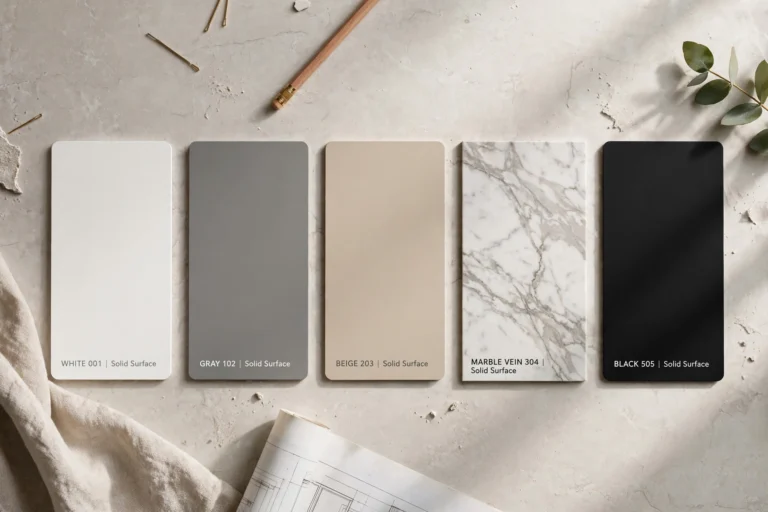
Corian comes in an enormous palette — from clean solid whites to warm neutrals, concrete looks, and convincing marble veining. Because it’s manufactured rather than quarried, the pattern you pick is the pattern you get: no surprise veins or color shifts between slabs. If design flexibility matters to you, browse our guide to the best Corian countertop colors for kitchens.
Pro #4: Costs Less Than Natural Stone
For most kitchens, Corian lands noticeably below granite or marble on total installed cost, while delivering a premium, custom-fabricated result. Material typically runs in the $40–65 per square foot range before fabrication and installation — we’ve broken the full numbers down in our Corian countertop cost guide.
Con #1: Heat Sensitivity
The honest tradeoff: Corian doesn’t love extreme heat. Setting a screaming-hot pan directly on the surface can scorch or discolor it. The fix is simple — always use trivets or hot pads — but if your household routinely moves cast iron from burner to counter without thinking, this is the con to take seriously. (Minor scorch marks, by the way, can usually be sanded out — see Pro #2.)
Con #2: Scratches More Easily Than Quartz or Granite
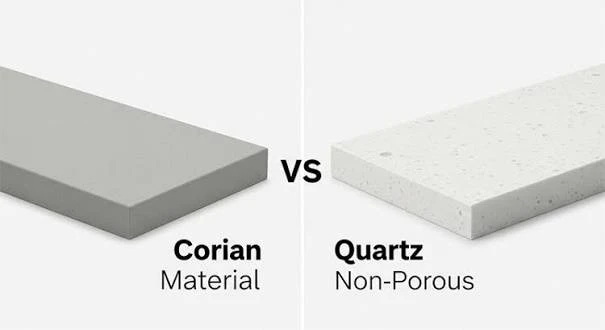
Corian is softer than quartz and granite, so knives and dragged ceramics will leave marks over time. In practice, most homeowners find the marks are shallow and blend into the matte finish — and again, they’re repairable rather than permanent. If a bulletproof surface is your top priority, our Corian vs quartz comparison lays out the durability difference honestly.
Con #3: Adds Less Resale Value Than Natural Stone
Straight talk for sellers: in the resale market, buyers still pay a premium for the words “granite” and “marble.” Corian photographs beautifully and functions wonderfully, but it won’t move an appraisal the way natural stone can. If you’re renovating purely to sell within a year or two, factor that in. If you’re renovating to live with the kitchen, weight the pros above more heavily.
Our Verdict: Who Corian Is Best For
After years of installing it, here’s our read: Corian is best for busy families who want a seamless, low-maintenance kitchen; for modern designs where invisible seams and integrated sinks matter; and for homeowners who want a premium custom look without natural-stone pricing. It’s not the right pick if you regularly put hot pans straight on the counter or you’re flipping the house next spring.
Want an honest opinion about your specific kitchen? That’s what we do. Call (833) 422-2167 or get a free quote — we’ll tell you straight whether Corian fits your project, and if it doesn’t, we’ll say so.
Related reading: how long Corian countertops last, professional Corian installation in Detroit, Corian kitchen countertops
Frequently Asked Questions
Is Corian outdated?
Not really — it’s evolved. Modern Corian colors include concrete looks, deep charcoals, and marble veining that fit contemporary kitchens. What looks dated is usually 1990s-era speckled patterns, not the material itself.
Does Corian stain?
Because it’s non-porous, Corian resists staining far better than marble or butcher block. Strong dyes (like turmeric or red wine left sitting for hours) can leave a mark on light colors, but most marks clean off with a mild abrasive cleaner.
Can you put hot pans on Corian?
You shouldn’t place very hot pots or pans directly on Corian — use a trivet or hot pad. Brief contact with warm dishes is fine; it’s sustained extreme heat that causes damage.
What does Corian cost in Detroit?
Material typically runs $40–65 per square foot, with total installed cost depending on kitchen size, edge profiles, and sink integration. See our Corian countertop cost guide for Detroit-specific numbers, or call (833) 422-2167 for a free quote on your kitchen.