How to Clean Corian Countertops Without Damaging Them
The daily routine: wipe, rinse, dry
Forget the fancy stuff for a second. For day-to-day cleaning, Corian needs almost nothing:
- Warm water and a squirt of mild dish soap on a soft cloth or sponge.
- Wipe the surface down.
- Rinse the cloth and wipe again — get all the soap off.
- Dry the countertop completely.
That last step is the one everyone skips, and it’s the whole game. Corian is non-porous, so nothing soaks in — but water left to air-dry leaves a film. A few months of that and your counters look blotchy, like the finish is wearing out. It’s not wearing out. It’s a soap-and-mineral film sitting on top of it. Drying takes twenty seconds and saves you from calling us for a refinish down the road.
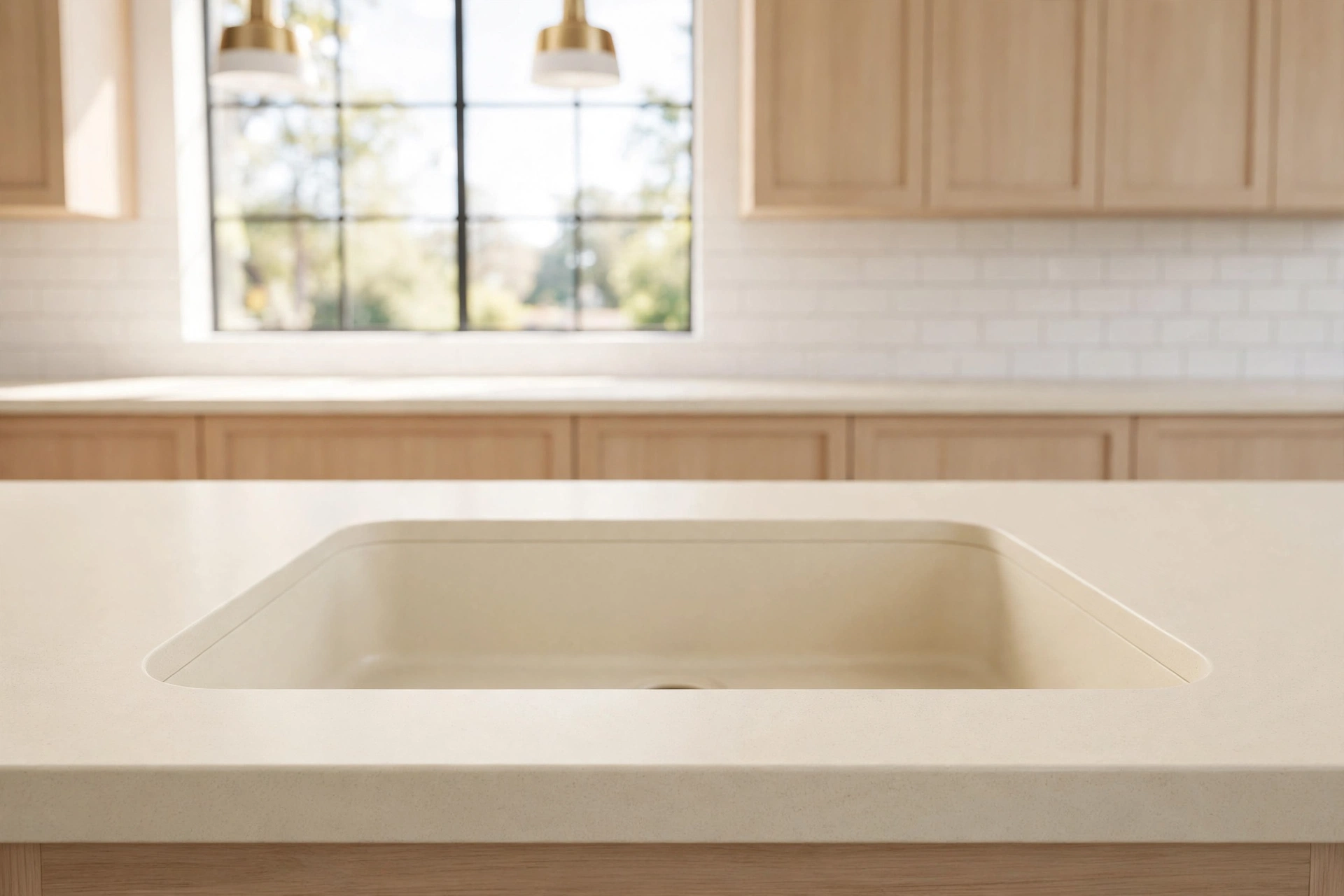
Quick note on finish: most residential Corian ships with a matte/satin finish, and all Corian sinks do too. These daily rules apply to every finish. Gloss just punishes mistakes faster — more on that below.
What actually works on Corian (the safe list)
Here’s what’s genuinely safe on Corian, based on DuPont’s own care guidance and about a decade of installs:
- Warm soapy water — your daily driver. Enough for 95% of everything.
- Ammonia-based household cleaners — good for grease and built-up residue. Rinse and dry after.
- Dedicated solid-surface cleaners — the sprays sold for solid surfaces work well. Follow the label.
- Diluted household bleach (occasionally) — the standard disinfection mix is about 5 tablespoons of bleach per gallon of water. Use it for sanitizing, then rinse thoroughly and dry. Occasionally. Not every day.
One thing to skip even though every grocery store sells it: window cleaner. Windex-style sprays leave a waxy buildup on Corian that dulls the finish over time. It’s one of the most common things we find in cabinets when we get called about a “dull” countertop.
What to never use on Corian
This list is shorter than people expect, but everything on it will cost you:
- Abrasive scouring pads — green Scotch-Brite and steel wool put fine scratches in the finish. On a matte top we can sometimes polish those out; on a gloss finish, you’ve got a dull patch that needs a professional refinish. If you’ve got stubborn residue, use a cleaner made for it instead of scrubbing harder.
- Oven cleaner, drain cleaner, and harsh chemicals — these are strong enough to discolor or pit the surface. A splash wiped up instantly is usually fine; a soak is not.
- Acetone and paint thinner — can dissolve or haze the acrylic. Keep them off your counters, period.
- Boiling water poured directly on the surface — Corian is heat-sensitive. It won’t melt from a warm pan, but pouring boiling water straight onto the counter or setting a ripping-hot pot down can leave a mark. Trivets are cheap. Use them.
None of this is dramatic. It’s just respect for a material that’s mostly plastic and minerals. Treat it like the finish on a nice car and it’ll outlive your cabinets — properly cared-for Corian can last decades.
Stains and hard water: the Detroit reality
Our water here isn’t kind to anything. Hard-water minerals show up on every countertop in metro Detroit eventually, and they show up fast on darker Corian colors. Dark tops demand more wiping than light ones — that’s just how it is.
For hard-water marks, use a cleaner formulated for hard-water deposits — CLR or Lime-A-Way type products work. Rinse well and dry completely afterward. For colored stains (coffee, tea, wine left sitting overnight), a diluted bleach solution applied briefly, then rinsed and dried, handles most of them. Corian’s non-porous surface means stains sit on the finish, not in it — which is exactly why it beats natural stone here (we laid out the honest tradeoffs in our Corian pros and cons guide).
The real fix, though, is boring: wipe spills up instead of letting them dry, and dry the surface after cleaning. Prevention is ten times easier than removal.
What about scratches from cleaning?
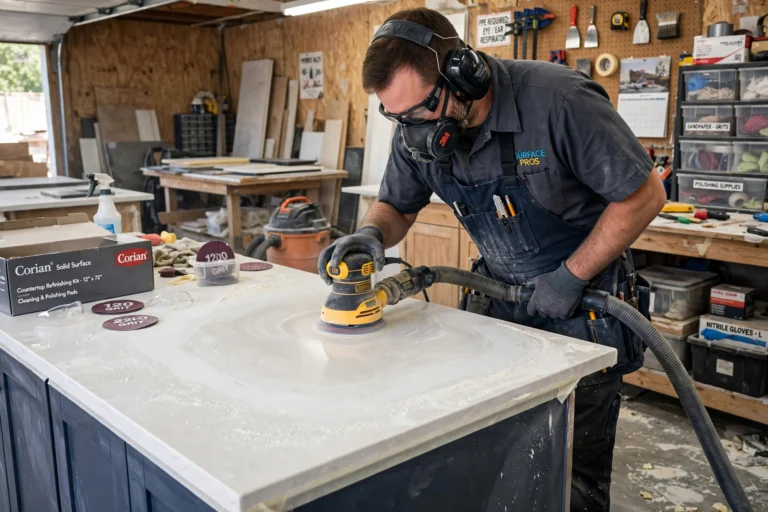
Light scratches happen. Sponges aren’t always as soft as you think, and grit from a cutting board gets dragged across the surface. On matte finishes, very fine surface marks can sometimes be buffed out with an extra-fine abrasive pad in small circular motions — but be honest with yourself about which scratches are “surface marks” and which are actual gouges.
If the mark catches your fingernail, stop. That’s repair territory, not cleaning territory. Corian is one of the few countertop materials that can actually be repaired instead of replaced — sanded, patched, and refinished so the seam disappears. If the cleaning went wrong or the damage came before you moved in, have a look at what Corian countertop repair involves before you live with it.
FAQs
Can you use Windex on Corian countertops?
You can, but you shouldn’t make a habit of it. Window cleaner leaves a waxy film on Corian that builds up and dulls the finish over time. Warm soapy water or an ammonia-based cleaner does the same job without the residue.
Does bleach damage Corian?
Not when used properly. A diluted solution — about 5 tablespoons of bleach per gallon of water — is the recommended way to disinfect Corian occasionally. Rinse thoroughly and dry afterward. What you should never do is soak the surface in bleach or use it straight from the bottle repeatedly. That’s a shortcut to a faded, uneven finish.
Why does my Corian countertop look cloudy?
Nine times out of ten, it’s a film — soap residue and hard-water minerals left from cleaning without drying. Try cleaning with an ammonia-based cleaner, rinsing completely, and wiping totally dry. If the cloudiness doesn’t lift, the finish may need a professional refinish, not more cleaning.
How often should I wipe down my Corian counters?
After every use for spills and crumbs, with a full soap-and-water wipe at least a few times a week in a busy kitchen. The frequency matters less than the habit: rinse the soap off and dry the surface every single time you clean it.
Can I disinfect Corian countertops?
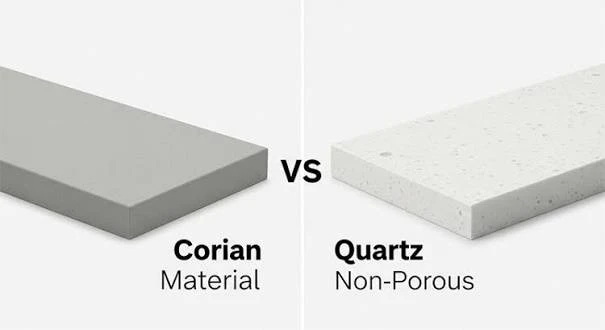
Yes. Corian is non-porous, which already makes it one of the more hygienic countertop materials — bacteria and mold have nowhere to hide. For periodic disinfection, use the diluted-bleach mix above, rinse well, and dry.
When cleaning stops being enough
There’s a point where no cleaner fixes it — deep scratches, scorch marks, a seam that shifted, a finish worn dull from years of the wrong sponge. That’s not a cleaning problem anymore; it’s a repair or refinish job. And in some cases, the honest answer is replacement — we’ll tell you which one straight.
Cleaning a Corian countertop correctly is a two-minute habit that protects a big investment (see what Corian countertops typically cost). If yours is already showing the damage — cloudy finish, scratches, burn marks — don’t fight it with stronger chemicals. That’s how good tops get ruined.
Call us at (833) 422-2167. We’re Detroit installers — we put these counters in, we repair them, and we’ll tell you straight whether your countertop needs a refinish or just a better sponge. Or reach us through our contact page if you prefer.