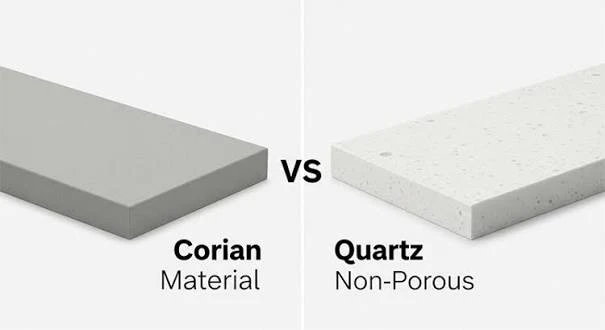
Solid Surface vs Quartz Countertops
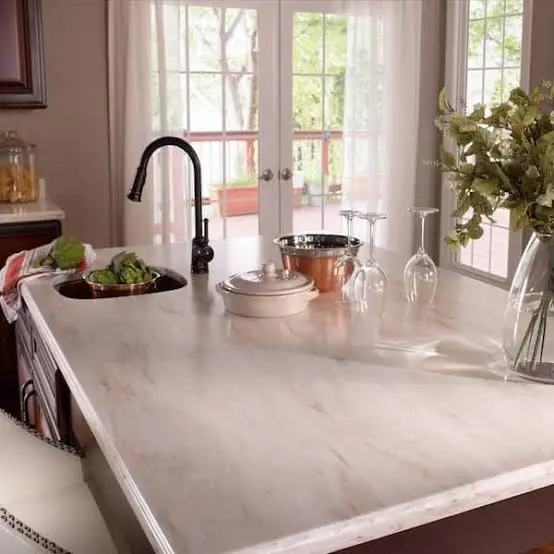
Solid Surface vs Quartz Countertops: A Complete Buyer’s Guide
Solid surface (such as Corian) is seamless, repairable and usually lower in cost. Quartz is harder, more scratch-resistant and handles heat better. Neither is “best” for everyone. The right pick depends on how you cook, how much you want to spend and what look you want. This guide walks you through each step of that decision.
Solid Surface vs Quartz: Quick Comparison
| Feature | Solid Surface (e.g., Corian) | Quartz |
| Material | Acrylic or polyester resin + mineral filler | About 90%+ ground quartz + resin |
| Scratch resistance | Moderate; light scratches can be sanded out | High |
| Heat resistance | Lower; hot pans can scorch | Better, but still not heatproof |
| Stains | Non-porous; resists most stains | Non-porous; resists most stains |
| Seams | Nearly invisible | Visible |
| Repairable | Yes, often on-site | Difficult |
| Sinks | Integrated, seamless option | Undermount or drop-in (no seamless integrated sink) |
| Typical installed cost* | About $45–$85 per sq ft | About $60–$120 per sq ft |
| Weight | Lighter | Heavy |
| Sealing needed | No | No |
*Typical ranges. Prices vary by color, edge, region and job size.
What Is Solid Surface?
Solid surface is a man-made material of acrylic or polyester resin blended with mineral fillers such as alumina trihydrate. It’s made in sheets, then cut, joined and shaped by a fabricator. Corian is the best-known brand, alongside others like Staron, Avonite and Hi-Macs.
Two features set it apart. It’s non-porous, so liquids don’t soak in. And it can be heated and shaped, so pieces are joined with color-matched adhesive and sanded until the seams nearly disappear. That’s how fabricators build one-piece countertops with integrated sinks and coved backsplashes.
What Is Quartz?
Quartz countertops are engineered stone. Manufacturers combine crushed natural quartz with resin and pigments, press it into slabs and cure it. Because it’s mostly stone, quartz is very hard. It’s also non-porous, so it doesn’t need sealing, unlike granite or marble.
Quartz comes in a wide range of colors and patterns, including realistic marble-look designs. Slabs are consistent, so the finished counter matches the sample more closely than natural stone does.
Solid Surface vs Quartz: Head-to-Head
Durability and Scratch Resistance
Quartz is much harder than solid surface, so it resists knife marks and everyday abrasion better. Solid surface scratches more easily, but you can usually sand out light scratches and dull spots. A pro can refresh deeper damage on-site. That’s the core of the Corian vs quartz durability question: quartz resists damage, solid surface is easy to fix.
Heat Resistance
Neither material is truly heatproof. Quartz tolerates more heat, but sudden temperature changes (thermal shock) can crack it or damage the resin. Solid surface can scorch or discolor under a hot pan. Use trivets or hot pads on both.
Stains and Hygiene
Both are non-porous, so spills don’t soak in and bacteria have nowhere to hide. Solid surface has no visible seams to trap grime, which is one reason it’s common in healthcare and hospitality. For daily cleaning, mild soap and water works on both.
Appearance and Seams
Solid surface can be shaped into curves, coved edges and one-piece sink-and-counter designs with almost no visible joints. Quartz has a more stone-like look and more pattern choices, but seams are visible, especially on large or L-shaped layouts.
Repairs
A chip or burn in solid surface can often be repaired on-site. Quartz chips can be filled, but repairs are harder to hide, and a cracked slab may need replacement.
Weight and Installation
Quartz slabs are heavy and often need more installers and sometimes extra cabinet support. Solid surface is lighter and easier to handle.
Use Outdoors
Neither material is a good fit for direct outdoor sun. Prolonged UV exposure can fade or change the look of both. Keep them indoors.
Warranty
Warranties vary by brand and fabricator, and some require installation by a certified fabricator. Many solid surface and quartz manufacturers offer 10-year or longer limited warranties. Always get the current terms in writing. [VERIFY current terms]
How to Choose Between Solid Surface and Quartz in 6 Steps
- Think about how you cook. Heavy daily cooking, lots of chopping and busy family use favor quartz. Lighter use or a bathroom favors either.
- Set your budget. Decide your total budget, including removal of old counters, sink, backsplash and edges, not just the material per square foot.
- Decide on the look. Want a seamless, modern or custom shape? Look at solid surface. Want a stone or marble look? Look at quartz.
- Plan your sink and backsplash. An integrated sink or coved backsplash is only possible with solid surface.
- See full-size samples at home. Check samples under your own lighting, next to your cabinets and floors. Small chips can look different once installed.
- Compare 2–3 written quotes. Ask each installer to price both materials for the same layout so you compare like with like.
Best Choice by Situation
| Your situation | Better fit | Why |
| Busy family kitchen | Quartz | Harder surface, better against daily wear |
| Tight budget | Solid surface | Usually lower installed cost |
| Seamless look or curved design | Solid surface | Joints nearly disappear; can be shaped |
| Integrated sink | Solid surface | Sink and counter can be one piece |
| Marble or stone look | Quartz | More realistic patterns |
| Bathroom vanity | Either | Solid surface for integrated sinks; quartz for a stone look |
| Older cabinets or limited support | Solid surface | Lighter weight |
| You want easy repairs | Solid surface | Scratches and burns can often be sanded out |
Care and Maintenance
Solid Surface
- Clean daily with mild soap and water or a non-abrasive household cleaner.
- Use trivets under hot pots and pans.
- Avoid strong chemicals such as paint removers, oven cleaners and drain cleaners.
- For scratches, follow the manufacturer’s care guide. Matte finishes are often buffed by hand, while glossy finishes usually need a pro.
Quartz
- Wipe with mild soap and water. No sealing is needed.
- Use trivets and avoid placing very hot cookware straight from the stove or oven.
- Avoid harsh solvents and strong cleaners, which can dull the surface.
- Use a cutting board. Quartz is tough, but blades dull quickly on any hard surface.
Common Mistakes to Avoid
- Choosing from a small sample only, without seeing a full slab or installed example.
- Ignoring where seams will fall, especially in L-shaped kitchens.
- Comparing quotes that don’t include the same scope (demo, sink cutout, backsplash, edge).
- Skipping a cabinet check before installing heavy quartz.
- Assuming any product called “Corian” is the same. Corian Quartz is a different product line (see below).
- Setting hot pans directly on either surface.
What Affects the Cost of Solid Surface and Quartz
The Corian vs quartz cost gap depends on more than the material. These factors change your final price:
- Color and brand: Premium patterns and designer lines cost more.
- Layout and size: More corners, cutouts and seams mean more labor.
- Edge profile: Custom edges add cost.
- Sink type: Integrated, undermount and drop-in each price differently.
- Backsplash: Full-height or coved backsplashes add material and labor.
- Removal and prep: Tearing out old counters and plumbing work are often extra.
- Your location: Labor and material prices vary by region.
Solid surface is generally the lower-priced option, while premium quartz lines cost more. The only reliable number is a written quote for your kitchen. [ADD: one real quote example from a partner installer, with the city and job size]
Questions to Ask Your Installer Before You Sign
- Are you certified by the manufacturer, and does that affect my warranty?
- What exactly is included in this quote (removal, sink cutout, backsplash, edge, plumbing)?
- Where will the seams go, and can I see the layout?
- Does my cabinet base need extra support for this material?
- How long from measurement (templating) to installation?
- What does the warranty cover, and can I get it in writing?
- How do you handle repairs if something is damaged later?
A Note on “Corian Quartz”
Corian Quartz is a separate engineered quartz line from the Corian brand. It’s not the same as classic Corian solid surface, so confirm which product you’re quoted.
Need Help Comparing Prices for Your Kitchen?
Get free, no-obligation quotes for solid surface and quartz from local installers. Call +15869268007 .
FAQs
Is solid surface better than quartz?
Neither wins in every category. Solid surface is better for seamless looks, custom shapes and repairability. Quartz is better for scratch resistance and heat tolerance.
Is Corian cheaper than quartz?
Usually, yes, though the gap depends on the color, layout and installer. Get quotes for both to compare.
Which lasts longer, solid surface or quartz?
With proper care, both can last for many years. Quartz resists damage better, while solid surface can be refinished when it wears.
Can you put hot pans on solid surface or quartz?
It’s best not to. Use trivets on both to avoid scorching or thermal shock.
Which is easier to maintain?
Both are non-porous and easy to clean with mild soap and water. Neither needs sealing.
Which is better for a bathroom, solid surface or quartz?
Both work well. Solid surface allows a seamless integrated sink, while quartz gives a stone-like look and a harder surface.
{
  "@context": "https://schema.org",
  "@type": "FAQPage",
  "mainEntity": [
    {"@type": "Question", "name": "Is solid surface better than quartz?", "acceptedAnswer": {"@type": "Answer", "text": "Neither wins in every category. Solid surface is better for seamless looks, custom shapes and repairability. Quartz is better for scratch resistance and heat tolerance."}},
    {"@type": "Question", "name": "Is Corian cheaper than quartz?", "acceptedAnswer": {"@type": "Answer", "text": "Usually, yes, though the gap depends on the color, layout and installer. Get quotes for both to compare."}},
    {"@type": "Question", "name": "Which lasts longer, solid surface or quartz?", "acceptedAnswer": {"@type": "Answer", "text": "With proper care, both can last for many years. Quartz resists damage better, while solid surface can be refinished when it wears."}},
    {"@type": "Question", "name": "Can you put hot pans on solid surface or quartz?", "acceptedAnswer": {"@type": "Answer", "text": "It's best not to. Use trivets on both to avoid scorching or thermal shock."}},
    {"@type": "Question", "name": "Which is easier to maintain?", "acceptedAnswer": {"@type": "Answer", "text": "Both are non-porous and easy to clean with mild soap and water. Neither needs sealing."}},
    {"@type": "Question", "name": "Which is better for a bathroom, solid surface or quartz?", "acceptedAnswer": {"@type": "Answer", "text": "Both work well. Solid surface allows a seamless integrated sink, while quartz gives a stone-like look and a harder surface."}}
  ]
}