Corian vs Granite Countertops: Which Is Better?
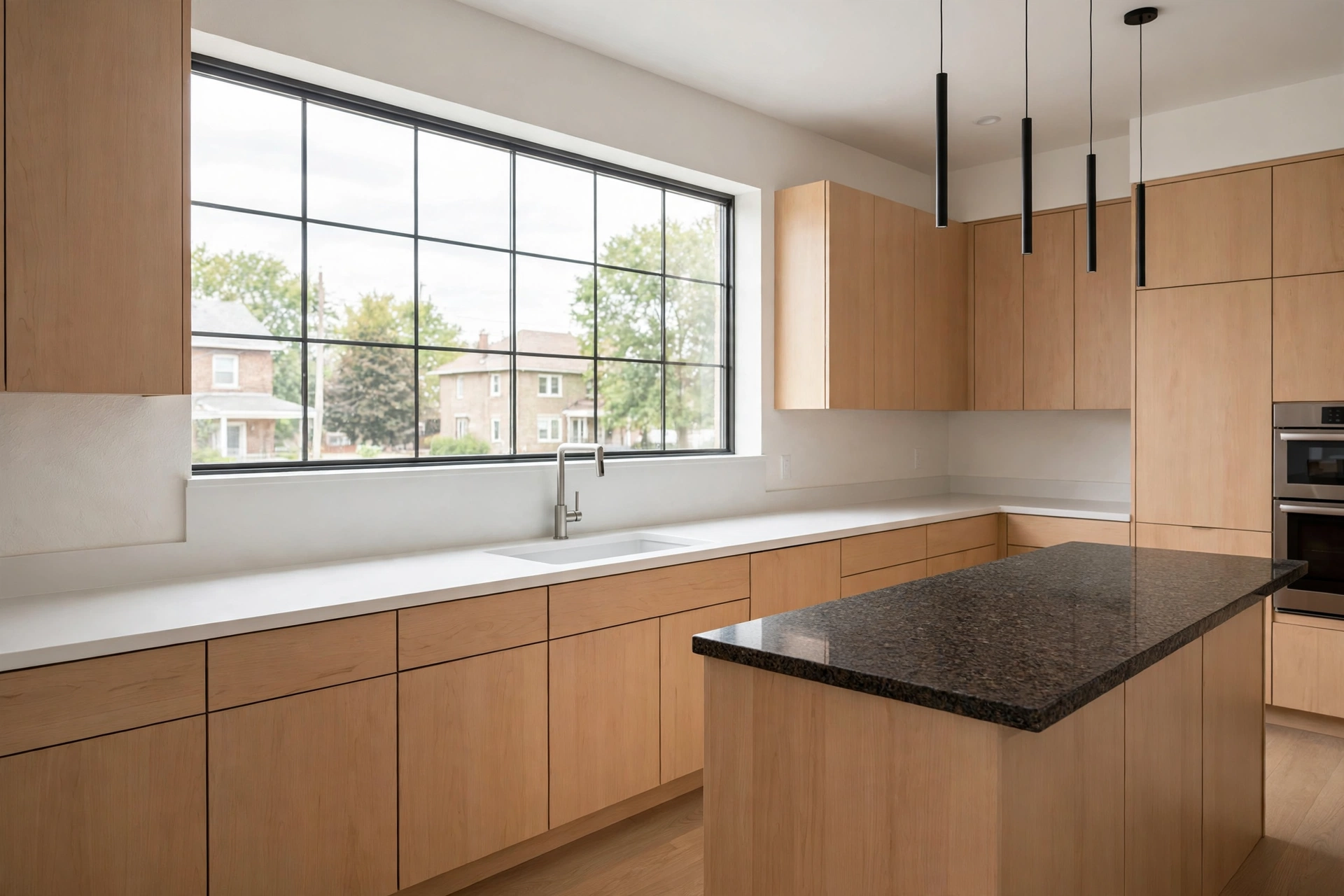
Ask ten homeowners and you’ll get ten different answers. Ask an installer who has put in both materials for years, and the answer gets a lot simpler: neither one is “better.” They’re built for different kitchens and different habits.
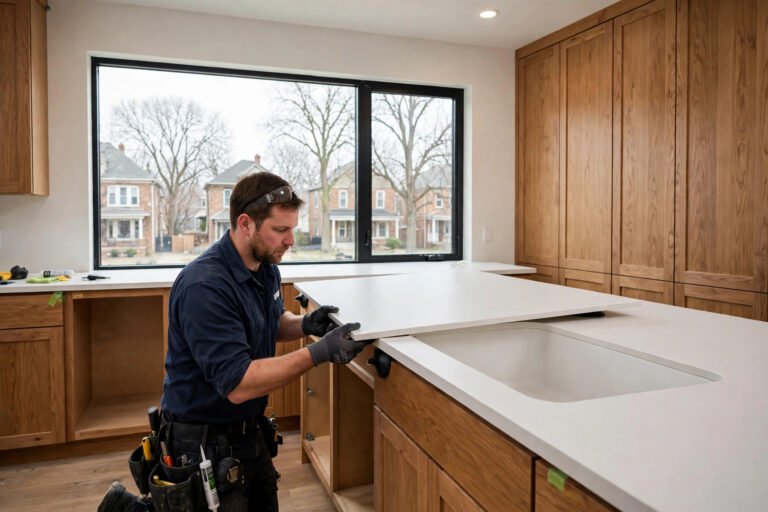
We’ve installed Corian all over Detroit and torn out plenty of granite. Here’s the honest comparison, the way we’d explain it standing in your kitchen.
The short answer
If you want a smooth, seamless top that’s easy to wipe down, never needs sealing, and can be sanded back to new when it gets scratched, Corian is the easier material to live with. If you want natural stone, a one-of-a-kind slab, and a surface you can set a hot pan on without thinking twice, granite wins — as long as you’re willing to seal it and live with visible seams on bigger runs.
Most of it comes down to how you really cook, on a Tuesday night, when you’re tired and the pan is hot.
What each one actually is
Corian is a solid surface material made by DuPont from acrylic resin and natural minerals. It’s manufactured, so every sheet is consistent in color and pattern, and it feels smooth and slightly warm to the touch. We covered the full picture in our Corian countertops pros and cons guide.
Granite is natural stone, cut from quarries in slabs. No two slabs are alike — the veins and speckles in your countertop exist in exactly one kitchen in the world. It feels cool and hard, unmistakably stone.
Looks and seams
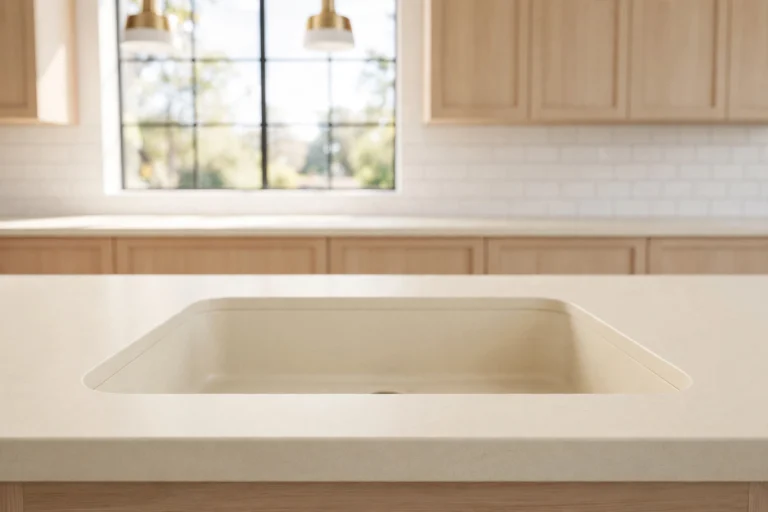
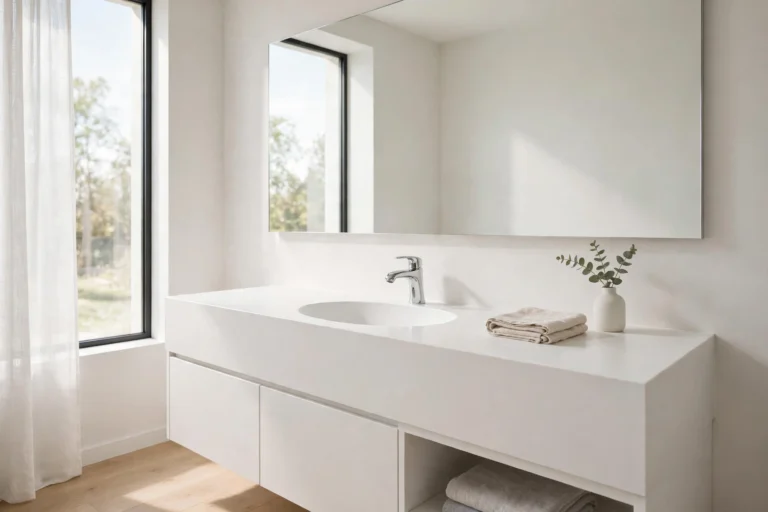
Walk into a kitchen with a big island and you’ll spot the difference right away. Corian joins are glued and sanded until they disappear, so a long run or an L-shaped kitchen reads as one continuous surface. That’s a real advantage if you like a clean, modern look, and it’s why Corian works so well with integrated sinks — sink and top can be the same piece.
Granite comes in slabs, and slabs have edges. On a big island or a long galley, expect visible seams. A good fabricator will place them where they bother you least, but they can’t make them vanish.
On color, Corian gives you consistency — you pick a color from a sample and that’s what shows up. We put together a guide to the top Corian countertop colors for kitchens if you want to see the range. Granite gives you surprise, so always look at the full slab before you commit.
Everyday durability: scratches, chips, and heat
Here’s where the two materials trade punches.
Granite is harder. You can drag a heavy pot across it and generally abuse it without leaving a mark. It handles heat like nothing else — a pan straight off the burner won’t hurt it.
Corian is softer: a knife will leave a line if you cut on it, and a heavy pan dragged across it can scuff it. Heat is the one thing you have to respect: sustained heat above roughly 325 degrees can discolor Corian, so trivets are non-negotiable. Put a trivet by the stove and the problem mostly goes away.
On the other hand, granite can chip. Drop a heavy pot on an edge and a piece can flake off, and it can crack over years of hard use, especially around a sink cutout. Corian doesn’t chip the same way, and a crack in Corian is something a good installer can usually fix invisibly.
Stains and cleaning
This is Corian’s strongest ground. It’s non-porous, which means spills sit on the surface instead of soaking in. Red wine, coffee, tomato sauce — wipe it up with soap and water and it’s gone. No sealing schedule, no special cleaner. Our how to clean Corian countertops guide covers the routine, and the routine is short.
Granite is porous. Left unsealed, it will drink in spills and stain — wine and oil are the usual culprits. Sealing fixes that, but it’s a chore you have to keep doing, usually every 6 to 12 months. Plenty of homeowners seal it once, forget about it for three years, and then wonder why there’s a dark ring where the olive oil bottle lives.
Repairs when things go wrong
Everything in a kitchen eventually gets damaged. The question is what the repair looks like.
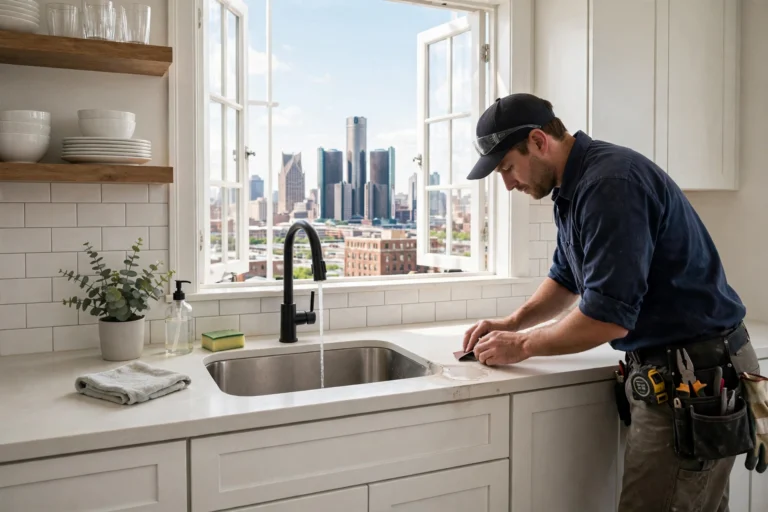
Light scratches on Corian can be buffed out with a scouring pad — we’ve done it in customers’ kitchens in ten minutes. Deeper scratches and burns can be sanded out by a pro, and the surface looks new again because the color runs all the way through. For the step-by-step, see our guide to how to remove scratches from Corian countertops.
Granite chips can be filled and color-matched, but a repair is a repair — on a busy stone pattern it hides well, on a dark polished slab you may always see it if you look for it. A cracked granite top is a bigger job and sometimes means replacing a section.
On lifespan, both last a long time when installed right. Corian carries a 10-year residential warranty and goes well past that with care; granite can last decades. We wrote more about what to expect in how long Corian countertops last.
What does it cost in Detroit?
Prices move with the slab, the color, the edge profile, and how complicated the install is, so anyone quoting you a single number for the whole city is guessing. Published national guides put Corian roughly at $70 to $130 per square foot installed, and granite anywhere from about $40 to $150 depending on the slab. A straightforward Corian job lands in the middle of the pack, while a premium granite slab with a fancy edge can run past it.
What drives your price: size and shape, the sink cutout, the edge you pick, and whether the old top needs to come out first. For your kitchen specifically, that’s a free quote, not a web search. Our Corian countertop repair cost guide shows how we think about pricing — the same logic applies to a new install.
Which one should you pick?
Pick Corian if:
- You want a seamless look with an integrated sink
- You hate maintenance chores and won’t remember to reseal anything
- You have kids, and the counter doubles as a homework station
- You like knowing a scratch can be sanded out instead of lived with
- You want consistent color with no surprises
Pick granite if:
- You love natural stone and want a slab nobody else has
- You cook hard — hot pans, heavy pots, no trivet in sight
- You don’t mind sealing once or twice a year
- You’re thinking about resale and want the “natural stone” line in the listing
Still torn? Come look at both in person. Photos lie — Corian feels warm and smooth, granite cool and hard, and that feeling is what you’ll live with every day.
Frequently asked questions
Can you put a hot pan directly on Corian?
No. Use a trivet or a hot pad. A pan straight off a burner can scorch or discolor the surface. Keep a trivet by the stove and you’ll never think about it.
Does granite really need sealing?
Yes. Granite is porous, and sealer is what keeps spills from soaking in and staining. Most tops need it every 6 to 12 months. The water test tells you when: sprinkle water on the surface — if it beads up, the seal is good; if it darkens the stone, it’s time to reseal.
Which one lasts longer?
Both last a long time. Granite can last decades with sealing and care. Corian typically carries about a 10-year residential warranty and lasts well beyond that with normal use. Which one still looks good in ten years depends on whether the scratches get buffed out and the sealer gets renewed.
Can a cracked Corian countertop be repaired?
In most cases, yes. Because the color runs through the whole material, a pro can repair a crack or a deep burn and sand the area back to a uniform finish. It’s one of the strongest reasons people choose Corian in the first place.
Which is better for resale value?
Granite usually photographs better in a listing and buyers recognize it as a premium material. A stained, unsealed granite top hurts more than either material choice. Condition beats material on resale day.
Talk it through with an installer
If you’re deciding between Corian and granite for a Detroit-area kitchen, the fastest way to a real answer is a look at your space and an honest conversation about how you cook. We do free quotes, and we’ll tell you if the other material would suit you better.
Call (833) 422-2167 or reach us through our contact page and we’ll help you pick the right one.